2026年07月23日

2026.02.05
Utilizing Drug Discovery AI Factory—which systematically identifies previously unknown correlations between diseases and target molecules based on existing literature—to explore new target molecules and indications for glycan-modification-based drug discovery
Tokyo, Japan, February 5, 2026 - FRONTEO, Inc. (Headquarters: Tokyo, Japan; President & CEO: Masahiro Morimoto; hereinafter “FRONTEO”) and GlyTech, Inc. (Headquarters: Kyoto, Japan; President & CEO: Hiroaki Asai; hereinafter “GlyTech”), a biotech venture engaged in the development and improvement of biopharmaceuticals based on glycan modification*1 and manufacturing technologies, have entered into a proof-of-concept (PoC) agreement aimed at identifying new target molecule candidates and indications using FRONTEO’s AI-based drug discovery support service, “Drug Discovery AI Factory” (hereinafter “DDAIF”)*2.
FRONTEO promotes joint research and PoCs with domestic pharmaceutical companies and biotech startups. This agreement is part of those efforts and will be implemented in the field of drug discovery research based on glycan modification.

GlyTech is a company specializing in glycan technology that was established as a spin-off from Otsuka Chemical Co., Ltd.
Its strength lies in proprietary technologies covering the entire process from glycan design and synthesis to mass production. By providing high-purity, structurally uniform glycans and glycan-modified molecules, the company supports the research and development of biopharmaceuticals and peptide drugs. Furthermore, GlyTech is engaged in R&D aimed at improving drug properties and creating new therapies through glycan technology.
In recognition of these efforts, GlyTech was selected as a J-Startup company under the Ministry of Economy, Trade and Industry’s “J-Startup 2021” program, which supports promising startups with global growth potential.
Overview of the PoC
FRONTEO possesses proprietary natural language processing technology that utilizes its in-house AI “KIBIT” to extract potential associations between diseases and target molecules not yet documented in the academic literature. The AI-based drug discovery support service DDAIF is utilized by pharmaceutical companies and research institutions to support the identification of new target molecule candidates and the analysis of disease mechanisms in drug discovery research.
In this PoC, the two companies will conduct a search for new target molecule candidates and indications using DDAIF, focusing on GlyTech’s research themes, including glycosylated somatostatin (development code: GT-02037)*3. By combining the technologies and expertise of both companies, this PoC aims to comprehensively evaluate the potential of drug discovery of glycan technology, expand opportunities for the development of new pharmaceuticals and therapies, and contribute to meeting unmet medical needs*4.
What Are Glycan Chains?
Glycan chains are molecular structures formed by the chain-like linkage of multiple monosaccharides (sugars with the most basic structure that cannot be further broken down). By binding to proteins and lipids, glycan chains play critical roles in biological processes such as cell-to-cell recognition and signal transduction. Glycan chains, sometimes called the "third chain of life" after nucleic acids and proteins, have recently attracted attention as an important research subject in drug discovery. By attaching glycans to pharmaceuticals, it is expected that drug efficacy and safety will be improved through enhanced in vivo safety, prolonged efficacy, and improved delivery to specific tissues.
Comment from Hiroaki Asai, President and CEO, GlyTech
“At GlyTech, we have created a development candidate by attaching glycans to somatostatin as a model for developing glycan-based drug discovery technologies. Somatostatin is a crucial peptide hormone that acts on many organs; however, due to issues with its biological stability, it is difficult to use as a drug in its natural form. GT-02037, which addresses these shortcomings, has already yielded favorable results in clinical trials involving patients with acromegaly. Since GT-02037 targets five receptor*5 subtypes, it is also anticipated to serve as a treatment for a wide range of diseases. We expect to expand applications to address unmet medical needs by utilizing FRONTEO’s DDAIF.”
Comment from Hiroyoshi Toyoshiba, Director and CSO (Chief Science Officer), FRONTEO
“FRONTEO’s strength lies in its ability to use proprietary AI and analytical technologies to identify novel relationships between diseases and target molecules—as well as disease mechanisms—that have not yet been reported in scientific literature, based on existing literature data. By integrating our DDAIF with GlyTech’s innovative glycan research and manufacturing technologies, we expect to significantly expand the potential for new treatments—such as improving receptor binding and developing multi-target biopharmaceuticals that act on multiple receptors—while leveraging the ability to design molecules that closely mimic naturally occurring glycans in vivo. We hope that this PoC will contribute to the creation of innovative pharmaceuticals, the fulfillment of unmet medical needs, and the development of Japan’s drug discovery industry.”
Notes:
*1 glycan modification: A technology for attaching glycans to glycoproteins, peptides, or small molecules, or the resulting glycan-attached form.
*2 DDAIF: An AI-driven drug discovery support service in which FRONTEO’s drug discovery experts, well-versed in both AI and drug discovery, leverage the natural language processing technology of FRONTEO’s proprietary AI “KIBIT” and its proprietary analytical methods to provide hypothesis generation for target molecule and indication discovery.
*3 glycosylated somatostatin: A molecule created by attaching sugar chains to somatostatin, a type of hormone. While somatostatin plays a crucial role in suppressing hormone secretion, its rapid degradation in the body and short duration of action are considered challenges. By adding sugar chains, it is expected to improve stability and blood retention in the body. Furthermore, drug discovery research is underway to explore new indications and reduce side effects by controlling interactions with receptors and distribution within the body.
*4 unmet medical needs: The need for new drugs, therapies, or treatment approaches for diseases for which effective treatments have not yet been established.
*5 receptor: A protein that receives information from inside or outside the cell and triggers a response within the cell.
About GlyTech, Inc. https://www.glytech-inc.com/
GlyTech has pioneered the establishment of “mass production technology for human-type N-linked glycans” and “glycan library synthesis technology,” creating new possibilities for drug discovery.
Based on high-purity, uniform glycans and precise glycan modification technology, the company collaborates with domestic and international partners through contract research, active pharmaceutical ingredient sales, and reagent sales to support the creation of next-generation pharmaceuticals.
In addition, glycosylated somatostatin (development code: GT-02037) is a next-generation somatostatin agonist with high stability in the bloodstream and agonist activity comparable to that of natural products, and has the potential to be applied to a wide range of diseases. Safety and efficacy are currently being evaluated in Phase 1 and Phase 2a clinical trials.
About FRONTEO Drug Discovery AI Factory (DDAIF)
[Reference: Initiatives with pharmaceutical companies and Academia]
https://www.fronteo.com/news/ddaif-list
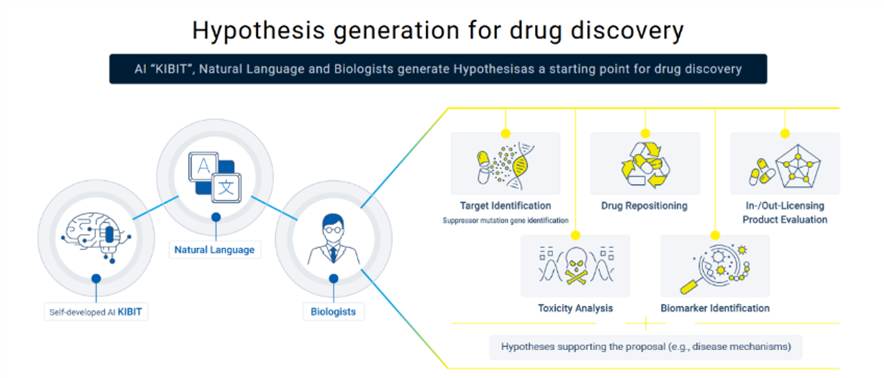
FRONTEO Drug Discovery AI Factory (DDAIF) is an AI-based drug discovery support service that combines KIBIT (patented in Japan, Europe, the U.S., and South Korea), an Equation-driven AI specialized in natural language processing, with the expertise of FRONTEO’s drug discovery researchers and AI engineers. It powerfully supports researchers’ decision-making in drug development through the analysis of disease-related gene networks and the construction of hypotheses regarding target molecule candidates. This service has already been adopted by multiple major pharmaceutical companies and has a proven track record.
*The technology used in Drug Discovery AI Factory is covered by a total of 21 patents held by FRONTEO in Japan, Europe, the U.S., and South Korea.
https://lifescience.fronteo.com/products/drug-discovery-ai-factory/
About FRONTEO, Inc. https://www.fronteo.com/en/
FRONTEO provides its proprietary Equation-driven AI KIBIT to support expert judgment across domains confronting social challenges. Its unique natural language processing technology (patented in Japan, Europe, the U.S., and South Korea) enables fast, high‑precision analysis without reliance on training data volume or computational power. Additionally, patented technology that maps (visualizes structure) analyzed information allows KIBIT to directly influence expert insights, and in recent years, KIBIT has been applied in hypothesis generation and target discovery for drug development.
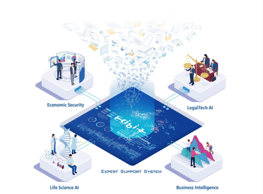
Guided by its mission to enhance fairness in the information society by uncovering opportunities and risks hidden in collective intelligence, FRONTEO applies KIBIT’s unique capabilities in life sciences AI, risk management (including economic security, business intelligence compliance support, business intelligence professional support and legaltech AI), and digital transformation support (Alnetz Inc.).
Founded in August 2003, FRONTEO was listed on the Tokyo Stock Exchange Mothers Market (now the Growth Market) on June 26, 2007. The company has offices in Japan, the U.S., and South Korea. As of March 31, 2026, FRONTEO’s capital stands at 915,057,000 yen.
*FRONTEO, KIBIT, and Drug Discovery AI Factory are trademarks or registered trademarks of FRONTEO in Japan, Europe, the U.S., and South Korea.
FRONTEO, Inc. Public Relations Department
Email: pr_contact@fronteo.com
Tel: +81-80-4321-6692
Inquiries Regarding FRONTEO Life Science AI Business
FRONTEO, Inc. Life Science AI Business Division
https://lifescience.fronteousa.com/contact/