2026年06月30日

2026.01.07
Tokyo, Japan, 7 January 2026 - FRONTEO, Inc. (Headquarters: Tokyo, Japan; President & CEO: Masahiro Morimoto; hereinafter “FRONTEO”) and CellAxia Inc. (Headquarters: Tokyo, Japan; President & CEO: Makoto Seki; hereinafter “CellAxia”), a biotech venture developing cell therapy*1 products for intractable and rare diseases, have entered into a Proof of Concept (PoC) agreement to improve the manufacturing efficiency and cellular function of cell therapy products under development by CellAxia using FRONTEO’s AI-based drug discovery support service, Drug Discovery AI Factory (hereinafter “DDAIF”).*2
Background and Overview of the PoC
FRONTEO possesses proprietary technology that utilizes its self-developed equation-driven AI “KIBIT” to discontinuously discover “unknown relations” between diseases and target molecules not described in existing literature. DDAIF, built on this technological foundation, excels at identifying highly novel target molecule candidates and analyzing disease mechanisms, and its adoption is expanding, particularly among major pharmaceutical companies.
CellAxia is a biotech venture advancing the development of cell therapies for intractable and rare diseases by utilizing its proprietary “Direct Conversion (DC) Technology,”*3 which directly converts one cell type into another. In addition to a track record of joint research with five national and public universities, the company has received high technical recognition, including selection for the “Project for Development of Evaluation Infrastructure Technologies for the Industrialization of Regenerative Medicine” by the Japan Agency for Medical Research and Development (AMED). The company is advancing R&D with the aim of commercializing groundbreaking cell therapies based on multiple development pipelines.
In this PoC, we will utilize FRONTEO’s DDAIF to refine CellAxia’s innovative DC technology, working to generate insights that will contribute to improving the manufacturing efficiency and quality characteristics of new cell therapy products.
Unlike synthetic pharmaceuticals, cell therapy products are heterogeneous in quality; consequently, challenges such as the difficulty of quality control during the manufacturing process and high production costs due to batch rejection are generally considered obstacles to commercialization. On the other hand, cell therapies utilizing CellAxia’s DC technology allow for the efficient production of target cells (such as osteoblasts) with simple manufacturing controls, enabling the optimization of production costs. This collaboration regarding DC technology—an excellent method for manufacturing cell therapy products—is expected to lead to the further evolution of DC technology, namely, further improvements in profitability through increased DC efficiency and enhanced performance of target cells.
By combining the technologies and expertise of both companies, they aim to contribute to the advancement of cell therapy and the resolution of unmet medical needs.*4
Comment from Makoto Seki, President & CEO, CellAxia
“The DC method is a technology that converts a cell into the phenotype of another cell by altering its chromatin structure (changing the epigenome) without changing the ‘genetic sequence’ of the cell’s genome. This phenomenon and concept are widely known in academia. However, to identify the conditions necessary for improving the efficiency of DC technology and enhancing cellular functionality, it is essential to conduct basic cellular experiments to elucidate the DC mechanism by analyzing the epigenomic factors contributing to DC. This requires a tremendous amount of time, effort, and talented researchers. We expect that FRONTEO’s AI-based drug discovery support service, ‘DDAIF,’ with its unique AI and analytical technologies, has the potential to uncover entirely new insights in a short period of time—discoveries that researchers might not have thought of on their own.
Through this collaboration, we will take on the challenge of updating our proprietary DC technology.”
Comment from Hiroyoshi Toyoshiba, Director and CSO (Chief Science Officer), FRONTEO
“FRONTEO’s strength lies in its ability to use proprietary AI and analytical technologies to non-linearly identify relationships between diseases and target molecules, as well as disease mechanisms, that have not yet been reported in scientific literature. Applying these technologies to improve the manufacturing efficiency and functionality of cell therapies represents a new challenge for DDAIF in terms of application areas, while also serving as a crucial step toward establishing appropriate analytical methods for diverse modalities and disease areas. We believe these efforts hold significant importance for the advancement of medicine, addressing unmet medical needs, and industrial applications, and we look forward to the results of this PoC.”
By leveraging their respective technologies and expertise, FRONTEO and CellAxia will maximize synergies to contribute to the research and development of innovative pharmaceuticals and therapies, the advancement of medical and pharmaceutical research, the growth of the pharmaceutical industry, and the improvement of healthcare quality and patient quality of life.
FRONTEO aims to contribute to the research and development of innovative pharmaceuticals originating in Japan, as well as to the growth of the pharmaceutical industry into a core industry on par with the automotive and semiconductor sectors, striving to create a fair world where medicines are appropriately delivered to everyone who needs them.
Notes:
*1 cell therapy: A treatment method that uses the patient’s own cells or those of another person to treat a disease.
*2 DDAIF: An AI-driven drug discovery support service in which FRONTEO’s drug discovery experts, well-versed in both AI and drug discovery, leverage the natural language processing technology of FRONTEO’s proprietary AI “KIBIT” and its proprietary analytical methods to provide hypothesis generation for target molecule and indication discovery.
*3 Direct Conversion: The Direct Conversion method, a new technology currently under development by CellAxia, is a groundbreaking medical technology that directly converts fibroblasts—which can be easily and non-invasively collected from patients—into the desired somatic cells (such as osteoblasts). A key feature of this technology is its ability to directly produce one type of somatic cell (such as osteoblasts) from another somatic cell through a simple, short-term manufacturing process without the need for pluripotent cells capable of differentiation. As such, it is expected to be commercialized as a future innovative medical technology.
*4 unmet medical needs: The need for new drugs, therapies, or treatment approaches for diseases for which effective treatments have not yet been established.
About CellAxia Inc. https://www.cellaxia.co.jp/index_en
CellAxia aims to contribute to global healthcare through cutting-edge technological innovation by commercializing next-generation cell therapies that utilize the unique properties of cell therapy products to bring about groundbreaking improvements in diseases that cannot be treated with conventional pharmaceuticals. The company maintains a multi-product clinical development pipeline (including E-MNC/CA-702 and 3D-DCob) targeting intractable and untreatable diseases, and aims for the early commercialization of customized, personalized medicine with optimized manufacturing costs.
Furthermore, a total of 34 patents (including exclusive rights) related to the DC technology covered by this collaboration have already been granted in Japan, Europe, the U.S., China, and South Korea.
About FRONTEO Drug Discovery AI Factory (DDAIF)
[Reference: Initiatives with pharmaceutical companies and Academia]
https://www.fronteo.com/news/ddaif-list
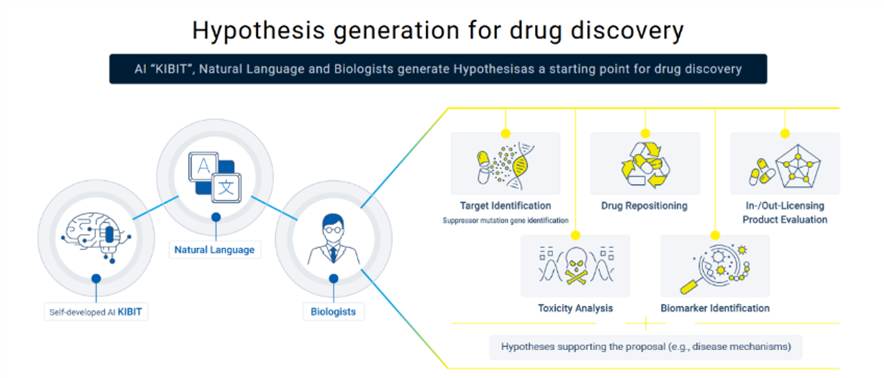
FRONTEO Drug Discovery AI Factory (DDAIF) is an AI-based drug discovery support service that combines KIBIT (patented in Japan, Europe, the U.S., and South Korea), an Equation-driven AI specialized in natural language processing, with the expertise of FRONTEO’s drug discovery researchers and AI engineers. It powerfully supports researchers’ decision-making in drug development through the analysis of disease-related gene networks and the construction of hypotheses regarding target molecule candidates. This service has already been adopted by multiple major pharmaceutical companies and has a proven track record.
*The technology used in Drug Discovery AI Factory is covered by a total of 21 patents held by FRONTEO in Japan, Europe, the U.S., and South Korea.
https://lifescience.fronteo.com/products/drug-discovery-ai-factory/
About FRONTEO, Inc. https://www.fronteo.com/en/
FRONTEO provides its proprietary Equation-driven AI KIBIT to support expert judgment across domains confronting social challenges. Its unique natural language processing technology (patented in Japan, Europe, the U.S., and South Korea) enables fast, high‑precision analysis without reliance on training data volume or computational power. Additionally, patented technology that maps (visualizes structure) analyzed information allows KIBIT to directly influence expert insights, and in recent years, KIBIT has been applied in hypothesis generation and target discovery for drug development.
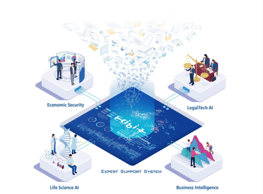
Guided by its mission to enhance fairness in the information society by uncovering opportunities and risks hidden in collective intelligence, FRONTEO applies KIBIT’s unique capabilities in life sciences AI, risk management (including economic security, business intelligence compliance support, business intelligence professional support and legaltech AI), and digital transformation support (Alnetz Inc.).
Founded in August 2003, FRONTEO was listed on the Tokyo Stock Exchange Mothers Market (now the Growth Market) on June 26, 2007. The company has offices in Japan, the U.S., and South Korea. As of March 31, 2026, FRONTEO’s capital stands at 915,057,000 yen.
*FRONTEO, KIBIT, and Drug Discovery AI Factory are trademarks or registered trademarks of FRONTEO in Japan, Europe, the U.S., and South Korea.
FRONTEO, Inc. Public Relations Department
Email: pr_contact@fronteo.com
Tel: +81-80-4321-6692
Inquiries Regarding FRONTEO Life Science AI Business
FRONTEO, Inc. Life Science AI Business Division
https://lifescience.fronteousa.com/contact/