2026年07月23日

2026.07.14
Results presented at the 53rd Annual Meeting of the Japanese Society of Toxicology, utilizing the AI-driven drug discovery support service "Drug Discovery AI Factory"
Tokyo, Japan, July 14, 2026 - FRONTEO, Inc. (Headquarters: Tokyo, Japan; President & CEO: Masahiro Morimoto; hereinafter “FRONTEO”), in a joint research project with Daiichi Sankyo Co., Ltd. (hereinafter “Daiichi Sankyo”), has developed a predictive model that uses the Equation-driven AI “KIBIT”*1 to automatically extract descriptions related to toxicological interpretations from SEND*2 data and toxicity test reports, and has confirmed its effectiveness.
The research teams from both companies presented these findings at the 53rd Annual Meeting of the Japanese Society of Toxicology, held from July 1 to 3, 2026, under the title “Possibilities for Text Analysis of Toxicity Test Reports Using Natural Language Processing.”
Overview of the Toxicity Information Analysis Initiative
This initiative is part of the efforts to analyze and utilize toxicity test databases and toxicity test reports by applying technology from FRONTEO's AI-driven drug discovery support service, “Drug Discovery AI Factory (DDAIF)”*3, which FRONTEO and Daiichi Sankyo have been advancing since November 2024.*4,5
To leverage insights gained from past toxicity tests for future research and development and safety assessments, the two companies have been conducting model development and technical validation with the aim of developing a system for collecting and managing toxicity test data. At last year’s 52nd Annual Meeting, they reported on a foundational system that stores SEND data and text from toxicity test reports in a database, making them accessible on the same platform.
As the next step, the two companies verified the feasibility of a technology that uses AI to link the numerical data stored in the database with the toxicological interpretations described in the reports. The two companies confirmed that relevant descriptions could be extracted with nearly equivalent accuracy not only from English-language reports of regulatory submission studies but also from Japanese-language reports of exploratory toxicity tests, which vary widely in their formatting, demonstrating the technology’s versatility regardless of language or document format.
Construction of the Prediction Model and Validation Results
In pharmaceutical research and development, toxicity tests are conducted to confirm the safety of candidate compounds.
While numerical data—such as blood test values—and text data—such as pathological findings—obtained from these tests are stored in a database in the SEND format, experts’ toxicological interpretations—such as “this finding is attributable to drug administration” or “this change is not toxicologically significant”—are recorded separately as text within the test reports.
To efficiently facilitate the secondary use of this accumulated data, it is essential to automatically link the numerical and textual data with the experts’ interpretations; however, this has been challenging due to the diverse formats in which the reports are written.
In this study, FRONTEO used KIBIT to construct a “predictive model for extracting descriptions related to toxicological interpretations from reports, in order to automatically link toxicological interpretations in the reports to SEND data,” targeting the toxicity test database and toxicity test reports held by Daiichi Sankyo.
As a result, the two companies successfully built effective predictive models for both English-language reports of regulatory submission studies—which feature a standardized text structure and detailed descriptions—and Japanese-language reports of exploratory toxicity tests—which have diverse text structures and concise descriptions—and confirmed that relevant descriptions could be extracted with relatively high accuracy.
Future Prospects
Pharmaceutical companies have accumulated vast amounts of toxicity test data over many years. However, much of this data is stored as individual test reports, and the cross-functional reuse of these insights has not progressed sufficiently. The predictive model developed in this study is expected to enable the systematic organization and search of historical toxicity data and expert interpretations, thereby facilitating its application at multiple stages of the drug discovery process, such as safety prediction for new compounds and the optimization of toxicity test designs.
Currently, a toxicity test database and a platform for utilizing reports are being developed by Daiichi Sankyo, with the aim of applying historical toxicity testing data to future research and development and safety assessments. To implement the findings of this research on this platform, both companies will explore system development to effectively utilize the accumulated insights.
FRONTEO will continue to contribute to the efficient development of safe pharmaceuticals and to improving the quality of medical care and patients’ quality of life (QOL) through collaboration with researchers and the provision of DDAIF.
Notes:
*1 Equation-driven AI “KIBIT”: An artificial intelligence independently developed by FRONTEO. By utilizing mathematical equations, KIBIT enables discontinuous discoveries, identification of causal relationships, and highly accurate, reproducible analyses. Its lightweight learning process enables fast, high-precision analysis on a single personal computer. Patents have been granted in Japan, Europe, and the U.S.
*2 SEND: Standard for Exchange of Nonclinical Data. A standard format for nonclinical trial data established by the Clinical Data Interchange Standards Consortium (CDISC: an international non-profit organization promoting data standardization in pharmaceutical and medical device development).
*3 DDAIF: An AI-driven drug discovery support service in which FRONTEO’s drug discovery experts, well-versed in both AI and drug discovery, leverage the natural language processing technology of FRONTEO’s proprietary AI “KIBIT” and its proprietary analytical methods to provide hypothesis generation for target molecule and indication discovery.
*4 November 12, 2024, press release: FRONTEO and Daiichi Sankyo signed an agreement for optimization and analysis of toxicity information with Drug Discovery AI Factory, https://www.fronteo.com/pr/20241112
*5 August 18, 2025, press release: FRONTEO Signs Phase 2 Agreement with Daiichi Sankyo on Toxicity Information Analysis Using the Drug Discovery AI Factory, https://www.fronteo.com/news/pr/20250818
About FRONTEO Drug Discovery AI Factory (DDAIF)
[Reference: Initiatives with pharmaceutical companies and Academia]
https://www.fronteo.com/news/ddaif-list
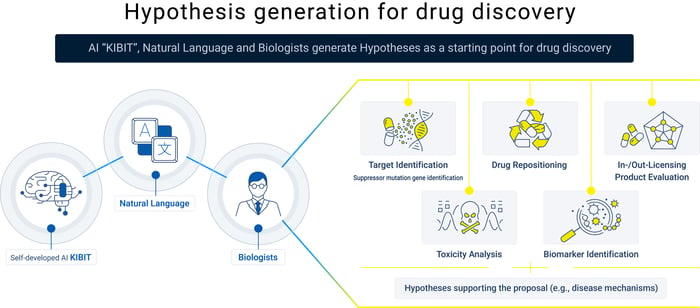
FRONTEO Drug Discovery AI Factory (DDAIF) is an AI-based drug discovery support service that combines KIBIT (patented in Japan, Europe, the U.S., and South Korea), an Equation-driven AI specialized in natural language processing, with the expertise of FRONTEO’s drug discovery researchers and AI engineers. It powerfully supports researchers’ decision-making in drug development through the analysis of disease-related gene networks and the construction of hypotheses regarding target molecule candidates. This service has already been adopted by multiple major pharmaceutical companies and has a proven track record.
*The technology used in Drug Discovery AI Factory is covered by a total of 21 patents held by FRONTEO in Japan, Europe, the U.S., and South Korea.
https://lifescience.fronteo.com/products/drug-discovery-ai-factory/
About FRONTEO, Inc. https://www.fronteo.com/en/
FRONTEO provides its proprietary Equation-driven AI "KIBIT" to support the judgment of experts in various fields who face social challenges day and night, and creates the starting point for innovation. Unlike general-purpose AI, its unique natural language processing technology (patented in Japan, Europe, the U.S., and South Korea) enables high-speed, high-precision analysis without reliance on training data volume or computational power.
Additionally, patented technology that maps (visualizes structure) analyzed information allows KIBIT to directly influence expert insights, and in recent years, KIBIT has been applied in hypothesis generation and target discovery for drug development.
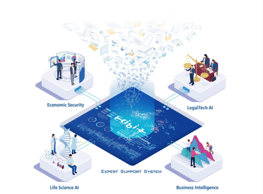
Guided by its mission to enhance fairness in the information society by uncovering opportunities and risks hidden in collective intelligence, FRONTEO promotes social implementation in life sciences AI, risk management (including economic security, business intelligence compliance support, business intelligence professional support and legaltech AI), and digital transformation support (Alnetz Inc.).
Founded in August 2003, FRONTEO was listed on the Tokyo Stock Exchange Mothers Market (now the Growth Market) on June 26, 2007. The company has offices in Japan and the U.S. As of June 30, 2026, FRONTEO’s capital stands at 915,057,000 yen.
*FRONTEO, KIBIT, and Drug Discovery AI Factory are trademarks or registered trademarks of FRONTEO in Japan, Europe, the U.S., and South Korea.